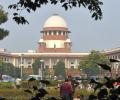
The Supreme Court on Friday dismissed a plea seeking stay on further sale of electoral bonds ahead of assembly elections.

The finance ministry on Wednesday said the government will borrow Rs 4.34 lakh crore in the second half of the current fiscal to meet its expenditure requirement amid COVID-19 crisis afflicting the country's economy.

Since 2014, many of Mohan Bhagwat's speeches have acted as cues for government policy.
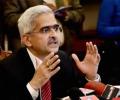
Amid prolonged uncertainty, continued policy support will be crucial for sustained economic recovery from the coronavirus pandemic, Reserve Bank Governor Shaktikanta Das said at the recent meeting of the Monetary Policy Committee. "In this period of prolonged uncertainty, it would be wise to remain agile and respond in a gradual, calibrated and well telegraphed manner to the emerging challenges," opined Das, according to the minutes of the MPC meeting released by the Reserve Bank on Thursday. Observing that economic recovery from the pandemic remains incomplete and uneven, he said, "continued support from various policies remains crucial for a sustained recovery." The governor said the renewed surge in international crude oil prices, however, requires close monitoring.

The survey covered 47,535 households in rural areas and 36,065 households in urban areas.

In a circular, the home ministry said the revised cash management system, formulated by the ministry of finance, has to be followed in view of the changes in tax receipt under the GST regime.

Defence experts want defence expenditure to be at 3% of GDP, which they consider minimum to counter the two-front threat from China and Pakistan, internal insurgencies, and dominating a 7,500 km coastline and the Indian Ocean beyond. What Arun Jaitley has given India this Budget is 2.16% of GDP, observes Ajai Shukla.

Chief Election Commissioner S Y Quraishi on Thursday called for a "complete check" on the menace of paid news during polls and emphasised on keeping a track on the expenditure record of candidates.

'Earning expectations remain strong.'
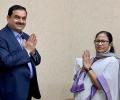
The words 'industry', 'industrial development', 'jobs', and 'employment' have been ringing with higher frequency since Mamata Banerjee stepped into her third term with landslide victory after a high-octane election last year. "Our government's next target is industrial development," the chief minister (CM) had been heard stating at different public meetings in the past few months - perhaps setting the tone for the sixth edition of the Bengal Global Business Summit (BGBS) slated for later this month. Investor summits by any state are about intent, big numbers, and tall claims. Yet in competitive federalism, its importance as a marketing tool is undeniable.

The EC also extended the silence period from 48 hours to 72 hours in each of the remaining three of the eight phases of the West Bengal polls to be held on April 22, 26 and 29.

The Comptroller and Auditor General of India on Monday reported multiple irregularities in the accounts of units under the IT and telecom ministries, including purchases of hardware and software worth Rs 890 crore by NICSI in contravention of rules. In its audit report for financial years 2017-18 and 2018-19, the Comptroller and Auditor General (CAG) has flagged anomalies in the decision taken by state-run telecom firm BSNL, C-DoT, the Department of Posts, ITI Limited and CDAC that had adverse financial implications. "NICSI procured hardware and software costing Rs 890.34 crore through the 'Strategic Alliance' route in contravention of General Financial Rules, 2005 and departmental instructions and thus failed to ensure transparency and competitiveness in the procurement process," according to the CAG report tabled in Lok Sabha on Monday.

India's macroeconomic situation is certainly better than what it was a year ago, eminent economist Pinaki Chakraborty said on Monday, while expressing hope that the country will be back on the path of economic growth if there is no major third wave of the COVID-19 pandemic. In an interview with PTI, Chakraborty, who is the director of the National Institute of Public Finance and Policy (NIPFP), said that inflation may remain at an elevated level as there was a significant fiscal and monetary expansion in the last 18 months. "The current macroeconomic situation is certainly much better than what it was one year back. We are seeing recovery in most sectors," he said. Chakraborty noted that COVID-19 vaccination has been going on at a very fast rate in India.
The Gujarat high court on Tuesday dismissed a public interest litigation seeking recovery of the expenditure incurred on the three-day fast observed by Chief Minister Narendra Modi under the Sadbhavna Mission in Ahmedabad last year.

The technical report of the NSSO has generated controversy following its observation that as much as 36 per cent units forming part of MCA-21 database, used in computing GDP, could not be either identifiable or traceable in the field.

As many as 403 infrastructure projects, each worth Rs 150 crore or more, have been hit by cost overruns of over Rs 4.05 lakh crore owing to delays and other reasons, according to a report.

Xi does not want to risk any political or economic crisis complicating his bid to remain in office, observes Ambassador Shyam Saran, the former foreign secretary.
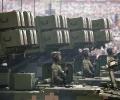
China hiked its annual defence budget by 7.1 per cent.

The Indian economy has recovered 'handsomely' from the pandemic-induced disruptions, former Niti Aayog vice chairman Arvind Panagariya said on Tuesday, while expressing hope that the recovery will be sustained and the growth rate of 7 to 8 per cent will be restored. Panagariya suggested that the government must now signal its intention to wind down fiscal deficit by cutting it by half-to-one percentage point in 2022-23. "The Indian economy has recovered handsomely, returning to its pre-COVID GDP... "Only private consumption is still below its pre-COVID-19 level," the eminent economist told PTI in an interview.

The additional outgo to combat the impact of COVID-19 will significantly erode the fiscal consolidation achieved by the state governments in the past three years, an RBI report said on Tuesday. In its study of the state budgets of 2020-21, the RBI report which has dwelled on the theme 'COVID-19 and its Spatial Dimensions in India', said that Gross Fiscal Deficit (GFD) of the states would spiral during the current fiscal.
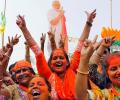
Of Rs 1,034.27 crore, the ruling party spent Rs 606.64 crore, while the Congress spent Rs 149.65 crore of its Rs 225.36 crore.
In an effort to curb money power in elections, the poll authorities in Andhra Pradesh have constituted special committees to monitor the expenditure of candidates on a daily basis in the bypolls to 12 assembly seats scheduled to be held on July 27.

Existing vacant government-funded housing complexes will be converted into Affordable Rental Housing Complexes through concession agreements for 25 years.

'Both of us are not politicians. We were forced to enter politics to counter corruption that is looting the country.'
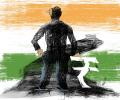
The employment situation remains dire. Whatever can be done to promote greater low-skill employment should be pursued aggressively, advises former chief economic adviser Shankar Acharya.

His about-turn in the farm laws proves that he sees everything in just one dimension: Politics. That helps sometimes. But not always, observes T C A Srinivasa-Raghavan.
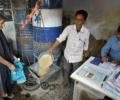
The Madras high court has observed that free PDS rice given to ration card holders should be restricted only to families below the poverty line, noting that doling out freebies to all sections of people have made people "lazy".
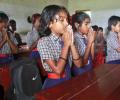
'Education will definitely benefit by making the child's first language the medium of instruction, by making examinations less prone to rote-learning, by setting up national research universities, all recommendations of the NEP,' observe Pankaj Jain and Shreekant Sambrani.

This is not an election Budget in the sense that I might target the voter in the coming elections. But if you look beyond this round of state elections, and tilt the periscope to graze at the more distant horizon, see how the Narendra Modi government wishes things looking by the summer of 2024, observes Shekhar Gupta.
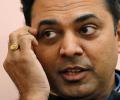
Chief Economic Advisor (CEA) K V Subramanian will be leaving the finance ministry and returning to academia on completion of his three-year term. The government had appointed Subramanian, an ISB Hyderabad professor, as the CEA in December 2018. He had succeeded Arvind Subramanian, who quit the position close to a year ahead of his extended tenure. Subramanian's three-year term would have come up for renewal in December but he decided to return to academia.

Observing that there is liquidity overhand of Rs 13 lakh crore in the system, RBI Governor Shaktikanta Das said on Friday that the exceptional measures undertaken during pandemic will be dealt in sync with macroeconomic developments to preserve financial stability. Since the onset of the pandemic, the Reserve Bank has maintained ample surplus liquidity to support a speedy and durable economic recovery, he said while announcing the outcome of the Monetary Policy Committee (MPC) meeting. The level of surplus liquidity in the banking system increased further during September 2021, with absorption under fixed rate reverse repo, variable rate reverse repo (VRRR) of 14 days and fine-tuning operations under the liquidity adjustment facility (LAF) averaging Rs 9 lakh crore per day as against Rs 7 lakh crore during June to August 2021, he said.

Gaurav Mohta lists three ways to ensure a smooth financial situation for your family despite rising interest rates.

The central bank can directly print money and finance the government, but it should avoid doing so unless there is absolutely no alternative, former RBI governor D Subbarao on Wednesday said while pointing out that India is 'nowhere' near such a scenario. In an interview with PTI, Subbarao suggested that to deal with the second wave of COVID-19 induced slowdown in the economy, the government can consider Covid bonds as an option to raise borrowing, not in addition to budgeted borrowing, but as a part of that.

The budget-making exercise offers golden opportunities despite challenges, observes Shankar Acharya, former chief economic adviser to the Government of India.
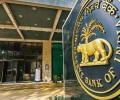
The Reserve Bank of India (RBI) booked massive gains on its foreign currency sales and needed to provide much lesser for its reserves in 2020-21 (FY21), helping it to carve out a significant Rs 99,122-crore dividend for the government, revealed the RBI's annual report for FY21. By doing so, the central bank's risk buffers have reduced to the bare minimum, which may restrict some of RBI's scale of operations, and would likely hamper dividend payout for financial year 2021-22, said analysts. The annual accounts are for nine months ended March 31, 2021 since the RBI changed its accounting year from July-June to April-March from FY21.
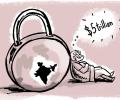
India might be heading towards a "serious livelihood crisis" as the situation seems to be worse this time for the working class amid the COVID crisis and local restrictions by states already add up to something close to a nationwide lockdown, according to noted economist Jean Dreze. In an interview to PTI, he also said the government's target to make India a $5 trillion economy by 2024-25 was never a "feasible target" and was just to pander to the "super-power ambitions" of the Indian elite. About the impact of the second wave of COVID on the Indian economy, the eminent economist said the situation today is not very different from what it was around this time last year as far as working people are concerned.

PM Modi on Sunday called upon states to "speed up capital expenditure and infrastructure creation" to spur economic growth.

'I do not want every Tom, Dick and Harry to collect money. Is there any state control over this collection of funds via crowdfunding?'

Households with only one employed person can be considered to be somewhat vulnerable. Their proportion is rising. Also rising is the proportion of highly vulnerable households with no person employed, observes Mahesh Vyas.
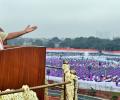
When he speaks of them, it is either in denial or to highlight successes that are only part of a larger story that is worrisome in its totality, observes T N Ninan.
